Sunday, 6 January 2019


Ten Books Which Shaped My Reading Life


Book number 1, Animal Farm.

This is the one that started it all for me. I never used to read much before this (except for comic books and books I was forced to read at school). This was part of my brothers’ school reading list, but not mine. I saw the book lying on the dining table one boring Sunday afternoon, picked it up, browsed througn it, and before I knew it, I was hooked. I read the whole book in one sitting. I was utterly engrossed by this story about a group of farm animals who kick out the farmer and take over the running of the farm - an allegory of communism


Book 2, A Clockwork Orange

I read this in my late teens, long before I even knew the film existed (I hated the film at first, because it was so different from what I had pictured in my head, although I came to appreciate it later on). I was particularly impressed by the way the author had created a whole new youth subculture with its own jargon, and how he had managed to depict a protagonist who was likeable despite being violent, psychopatic, arrogant and deeply unpleasant. This marked the beginning of my love affair with anti-heroes.

Book 3, The Brothers Karamazov

This book is described in Wikipedia as a passionate philosophical novel set in 19th-century Russia, that enters deeply into the ethical debates of God, free will, and morality. Heavy reading, but that’s what I was into at the time. This was in the nineties, when Eastern Europe was opening its borders and Russia, once a secretive and mysterious country behind the iron curtain, now became accessible. I was obsessed with Russia at the time. I even started taking Russian lessons. I had read Crime and Punishment before and thought no book could top that. But then I read Karamazov, which had everything the previous book had, but so much more. This is probably the best book I’ve ever read, although I’m not sure I’d have the patience to read it again, now that I am older and more mellow.


Book 4, The Woman in White.

I bought this back in the day when the only cheap books around were Wandsworth and Penguin Classics. You could often get five books for three pounds. It wasn’t the sort of book I’d normally go for, It looked a bit too melodramatic for my liking, but there wasn’t much choice, so I got it anyway. I was surprised at just how suspenseful this book was. I was on the edge of my seat reading it. It is Hitchcockian before its time! The book also changed my life in a different way. It sparked my interest for Victorian gothic and served as the main inspiration for my play "Death Takes a Lover", which has subsequently been turned into a novella and launched the D.S.Billings Victorian Mysteries.


Book 5 , The Hitchhiker’s Guide to the Galaxy.
Read this in my thirties when I finally tired of reading heavy classics. I remembered seeing episodes of the tv series in the 80’s and thought Iˆd give it a try, as the box set was on special offer at HMV. I think I read the whole series in less than a week. I’ve been looking ever since for something which is similarly fantastical, funny, witty and poignant, but haven’t found it yet. I’ve tried other works by Douglas Adams, but didn’t like them. I’ve also tried Terry Pratchett, but that didn’t do it for me either. If anyone has any suggestions, let me know.


Book 6, Flatland

Published in 1884, this is a book about maths, geometry and dimensions. Three subjects I thought would be of absolutely no interest to me, but I couldn’t have been more wrong. This book opened my eyes. It was meant to comment on the hierarchy of Victorian culture, but the most fascinating part is its examination of dimensions and the tantalising prospect of how we might experience a creature of four or more spacial dimensions appearing in our lives. I’m making this book sound much more complicated than it really is. Suffice to say that this novella sparked my interest in physics and is solely to be blamed for all the you tube documentaries I keep watching (when I should be writing) about quantum physics, entanglement, multiverses and the like (none of which I really understand, but they fascinate me anyway


Book 7, The Blind Assassin
This is the one where there is a novel within a novel within a novel. Three books for the price of one! I love the way in which the author strings three seemingly unrelated story strands together to shed light on one woman’s extraordinary life - I was inspired to do something similar with The Ornamental Hermit. I’ve been meaning to read more of Margaret Atwood, especially after seeing the brilliant adaptation of Alias Grace on Netflix.


Book 8, Wuthering Heights

Kate Bush picqued my interest in this book in the 1980’s, buit I didn’t get round to reading it until the noughties. I had seen some film and tv adaptations of this, but didn’t understand what the fuss was about. That’s because there is a tendency in film and tv to make period movies look pretty, and there is nothing pretty about this novel. It is as bleak and savage as the Yorkshire Moors on which it is set. It was a controversial book when it was published in 1847. It was described by the poet Dante Gabriel Rossetti as "A fiend of a book – an incredible monster. The action is laid in hell, – only it seems places and people have English names there." This book was fresh in my mind when I wrote Death Takes a Lover and I hope it shows.


Book 9, The Complete History of Jack The Ripper

When I decided to write a series of Victorian detective novels, this was among the first books I read as part of my research. It gives a very good impression of what police procedure was like at the time, but what most impressed me - and the reason why I am listing this as one of the ten books which marked my reading life - is its depiction of the lives of the Ripper victims. These tragic women are often ignored in other Ripper books. If you think of Victorian times as an era of demure women with pretty dresses, and handsome well spoken gentlemen with top hats, then you are wrong. For the poor and destitutre, life in Victorian times was one long hell. This book conveyed the griminess and depravity of every day life in the nineteenth century much better than any piece of fiction (barring perhaps some of Dickens’s novels). There are many non fiction books about Jack the Ripper, but this is definitely the most thorough and complete.


Book 10, The Secret Agent

This is the last book I read which really impressed me. Inspired by the mysterious death of French anarchist, Martial Bourdin, who died gruesomely in Greenwich Park when the explosives he carried detonated prematurely, this is a fictional account of what might have led to this strange tragedy. It is a taut, suspenseful and heartbreaking story. It also educated me about anarchist terrorism - a very serious problem which engulfed Europe and North America at the turn of the century. You don’t hear much about anarchism these days, even though a lot of parallels could be drawn with Islamic terrorism. As you might know, my current work in progress deals with anarchists, which explains why this book was at the forefront of my mind when I compiled the list.

Wednesday, 5 December 2018

Redressing the Balance or Why I Wrote Gay Noir


I have always been attracted to the 1940’s and 50’s. I’m not sure why that is. Perhaps it’s the way people dressed. Men in sharp suits and fedora hats, women in tight dresses and crazy hats. Or maybe it is because the world was still unspoiled; no traffic jams, no plastic waste. The world was bigger then, and more glamorous.

I love watching old films and reading books of that era. Noir books, in particular.  They bring me into a sexy world of tough, fast-talking detectives and seductive, double-crossing dames. An exciting world of smugglers, gangsters and spies. I particularly like how dark and twisted the stories are. There are no straight, honest heroes in noir fiction. The characters are cynical, morally skewed and flawed, which makes a refreshing change to the predictability of character and plot arcs of other genres.

Another thing I like about this genre is that, at a time  when gay characters were largely absent from fiction, noir was the only genre which acknowledged their existence. Of course, the gay characters in it were usually the villains. They were portrayed as cowardly, or untrustworthy or narcissistic. But what if I redressed the balance? What if we had an exciting, fast-paced thriller, set in the glamorous 40’s and 50’s, filled with intrigue and suspense, where the hero just happened to be gay?  Instead of a femme fatale, there’d be an homme fatal, perhaps. Or a tough, wise-cracking P.I . in a slick suit with an eye for handsome men, rather than glamorous showgirls.

It was this notion which led me to write  Gay Noir. Inspired by the pulp fiction novels of the 1940's and 50's, the novellas in this anthology emulate the dark, thrilling, sensational and taboo breaking stories of the post war era and gives them a gay twist. 

Buy ebook here
Buy paperback here 


Related articles

Sunday, 30 October 2016

A Brief History of Penny Dreadfuls


In the 1830s, increasing literacy and improving technology saw a boom in cheap fiction for the working classes. ‘Penny bloods’ was the original name for the booklets that, in the 1860s, were renamed penny dreadfuls and told stories of adventure, initially of pirates and highwaymen, later concentrating on crime and detection.


The first ever penny dreadful published was 'Lives of the Most Notorious Highwaymen, Footpads, &c.' It was  published in 1836 in 60 issues. 

Highwaymen remained a favourite topic for Penny Dreadfuls as publications such as  Gentleman Jack, Black Bess; or, The Knight of the Road, went to show.

The illustrations in these kind of publications were an essential element, particulary when it came to marketing. One regular reader was quoted as saying: ‘You see’s an engraving of a man hung up, burning over a fire, and some…go mad if they couldn’t learn what he’d been doing, who he was, and all about him.’ 

It was hardly surprising, therefore, that one publisher’s standing instruction to his illustrators was, ‘more blood – much more blood!’


The most successful penny-dreadful the world has ever seen was Mysteries of London by G W M Reynolds which first appeared in 1844. 

He based the series on a French book, but it soon took on a life of its own, spanning 12 years, 624 numbers and nearly 4.5 million words . Instead of highwaymen, this series was much closer its readers’ own lives, contrasting the dreadful world of the slums with the decadent life of the careless rich.


After highwaymen and then evil aristocrats fell out of fashion, penny-bloods found even more success with stories of true crimes, especially murders. And if there were no good real-life crimes current, then the bloods invented them. The most successful of them was the story of Sweeney Todd. The ‘Demon Barber’ first appeared in a blood entitled The String of Pearls, which began publication in 1846. Even before it reached its conclusion, it was adapted for the stage, setting the murderous barber, who killed his clients for his neighbour Mrs Lovett to bake into meat-pies, on the road to world fame.


After concentrating first on highwaymen and then on true crime,  it was the pursuers, not the murderers, who took centre-stage in penny dreadful publications.

 In 1865, a 70-part penny dreadful, The Boy Detective, or, The Crimes of London, appeared, with its hero, Ernest Keen, who runs away from home and works for a police inspector, ‘so cleverly that the fly coves called him the BOY DETECTIVE!’

Penny-bloods had originally had a broad readership, but in the 1860s the focus narrowed, and children became the main target. There were dozens of titles – The Wild Boys of London (1864–66), The Poor Boys of London (c.1866), even The Work Girls of London (1865).

This article was copied and pasted from: https://www.bl.uk/romantics-and-victorians/articles/penny-dreadfuls

Saturday, 27 August 2016

The Gothic Tinge - 14 Gothic movies which aren't horror.

There's more to Gothic than ghosts and vampires. Originally, the term Gothic was used to describe a certain style of architecture. Later this term was applied to a type of literature. Nowadays, when one speaks of Goths or Gothic, a pale, dark haired, glum looking young person comes to mind who wears black clothes and has a lot of piercings.

In the world of film, 'Gothic' is often used  to describe a certain mood (rather than a genre). It's a mood of impending darkness, of repressed sexuality, of autumnal decay.

Following on from my previous blog, in which I explain the origins of Gothic, I thought I'd list a number of films which have been painted with a tinge of Gothic.  I chose two films of each decade since the 40's (because I like doing that) which illustrate the varied ways in which Gothic has tinged cinema.

The 1940's - Gothic Melodramas 

From the 1940's we have 'Rebecca' and 'Great Expectations'. Two dark melodramas which deal with the themes of death, grief and insanity and which are (at least partially) set in large, decaying mansions.

"Rebecca" is the story of a young woman who marries a fascinating widower only to find out that she must live in the shadow of his former wife, Rebecca, who died mysteriously several years earlier. The young wife must come to grips with the terrible secret of her handsome, cold husband, Max De Winter. She must also deal with the jealous, obsessed Mrs. Danvers, the housekeeper, who will not accept her as the mistress of the house.

Rebecca
In this adaptation of Dickens' "Great Expectations" Pip, a poor orphan, learns that a mysterious and anonymous benefactor, has given him  immediate funds to train him in the gentlemanly arts and become a man of great expectations - so far so good - but when the when the identity of the benefactor is finally revealed, this seemingly happy tale takes on a dark and bitter twist.

Great Expectations


1950's - Gothic Realism

In the 1950's, Gothic became gritty. Tennessee Williams may not traditionally be known as a Gothic writer, but many of his plays contain all the elements of Gothic; i.e madness, repressed sexuality and a general mood of impending darkness. Two film adaptations of his most famous plays demonstrate this brilliantly. 

Both Blanche du Bois (in A Streetcar Named Desire) and Maggie the Cat (in Cat on a Hot Tin Roof) are driven to despair by feelings of lust for a man they can not have. Both films are shot in a tight, claustrophobic manner and ooze with a sense of impending doom.  

"A Streetcar Named Desire" follows troubled former schoolteacher Blanche DuBois as she leaves small-town Mississippi and moves in with her sister, Stella, and her husband, Stanley, in New Orleans. Blanche's flirtatious Southern-belle presence causes problems for Stella and Stanley, who already have a volatile relationship, leading to even greater conflict in the Kowalski household.


A Streetcar Named Desire


In "Cat on a Hot Tin Roof" alcoholic Brick Pollitt and his tempestuous wife, Maggie, visit Brick's family's Mississippi plantation for the 65th birthday of his hot-tempered father, Big Daddy. Cantankerous even with declining health, Big Daddy demands to know why Brick and Maggie haven't yet given him a grandchild, unlike Brick's brother Gooper and his fecund wife, Mae.

Cat on a Hot Tin Roof

1960's - Gothic Grotesque

In the 1960's Gothic became grotesque. Grotesque characters have always been a main staple of Gothic literature and now, in the 60's, Bette Davis - the great diva of 30's and 40's cinema - was given the opportunity of making a comeback by (literally) showing her ugly side.

In "Whatever Happened to Baby Jane" she plays a demented former child star who lives to taunt her sister. In "Hush Hush Sweet Charlotte" she plays an old recluse who was accused 40 years ago of decapitating her lover.

Whatever Happened to Baby Jane?

Hush, Hush, Sweet Charlotte

1970's - Rural and Southern Gothic

Wikipedia describes Southern Gothic as a subgenre of Gothic fiction in American literature that takes place in the American South. Common themes include deeply flawed, disturbing or eccentric characters who may or may not dabble in hoodoo, ambivalent gender roles, decayed or derelict settings, grotesque situations, and other sinister events relating to or stemming from poverty, alienation, crime, or violence.

"Deliverance" is a film about four city slickers who go on a canoeing trip in the forests of Georgia, where they are stalked and savagely attacked by group of deranged backwoods locals. 

Deliverance
Although "The Wicker Man" is not set in the American South - and can thereby not really be termed Southern Gothic - the theme and mood of this film is the same as in Deliverance. The film is about a police detective who  arrives on a small Scottish island to investigate the report of a missing child. A conservative Christian, the policeman observes the residents' frivolous sexual displays and strange pagan rituals, with disdain. But the more he learns about the islanders' strange practices, the closer he gets to tracking down the missing child and to his own terrifying fate.


The Wicker Man

1980's - Comic Book Gothic

In the 1980's, Tim Burton popularised Gothic with his two dark, comicbook-like adaptations.

Batman was always meant to be a Gothic tale - it is, after all, set in a town called Gotham. Bruce Wayne is a dark, brooding and reclusive millionaire who dresses up as a Bat to fight criminals. His nemesis is another business man whose face has been horrifically disfigured after falling into a vat of acid.

Batman
In the Frankensteinesque tale of "Edward Scissorhands", Vincent Price (best known for his horror movies from the 60's and 70's)  plays a scientist who builds an animated human being -- the gentle Edward. The scientist dies before he can finish assembling Edward and leaves the young man with a freakish appearance accentuated by the scissor blades he has instead of hands.


Edward Scisorhands


1990's - Art House Gothic

In the 90's Gothic went all art house. Although neither film is set in the American South, both "The Piano" (set in New Zealand) and "The Reflecting Skin" (set in the American mid west) display all the elements of Southern Gothic; i.e  deeply flawed, disturbing and eccentric characters,  ambivalent gender roles, decayed or derelict settings, grotesque situations, and other sinister events stemming from alienation,

In "The Piano" Ada McGrath and her young daughter are left with all their belongings, including a piano, on a New Zealand beach after a long voyage from Scotland. Ada, who has been mute since childhood, has been sold into marriage to a local man. Making little attempt to warm up to her new husband, Ada soon becomes intrigued by his friendly acquaintance, George Baines which leads to a tense and tragic life-altering conflict.

The Piano


"The Reflecting Skin" is set in a small town in 1950's Idaho. 8-year-old Seth and his friends play a prank on the town recluse, a widow named Dolphin Blue. When his friends start disappearing, Seth becomes convinced Dolphin is a vampire, stealing the souls of the neighborhood children one by one. After his brother, Cameron , returns home and takes a liking to Dolphin, Seth feels it's up to him to save Cameron from his friends' fate.

The Reflecting Skin


2000's - Musical Gothic

In the noughties, Gothic went musical, when the musical versions of two Penny Dreadful classics hit the big screen. 

In "The Phantom of the Opera", the titular 'phantom' lives far beneath the majesty and splendour of the Paris Opera House, where, shamed by his physical appearance, he leads a shadowy existence. Infatuated by the beautiful protégée, Christine Daaé, he does all he can to aid her rise to the top and hear her sing his compositions. 

The Phanthom of the Opera

Sweeney Todd is a barber who dispatches his victims by slitting their throats with his straight razor. . After robbing his dead victims of their goods, Mrs. Lovett, his lover and partner in crime, assists him in disposing of the bodies by baking their flesh into meat pies and selling them to the unsuspecting customers of her pie shop.


Sweeney Todd


If you enjoy Gothic, please do check out the two books in the "D.S. Billings Victorian Mysteries Series". The two stand alone novels deal with Quaker Detective Sergeant John Billings - an honest and hard working man who has risen swiftly through the ranks to become one of Scotland Yard's youngest detectives. But in his private life he struggles with the demons of loneliness, morphine addiction and homosexuality.

Death Takes a Lover

The Ornamental Hermit


Sunday, 16 August 2015

Hell Hath No Fury - A List of Cinema's Greatest Femmes Fatale

"And Man knows it! Knows, moreover, that the Woman that God gave him
 Must command but may not govern—shall enthral but not enslave him.
 And She knows, because She warns him, and Her instincts never fail,
 That the Female of Her Species is more deadly than the Male."
Rudyard Kipling

"Heaven has no rage like love to hatred turned, Nor hell a fury like a woman scorned."
William Congreve

 Never mind "the evil that men do"! In the world of story telling it is a woman's wrath which truly engrosses us. Why, even the oldest story ever told starts off with Eve tempting Adam into disobeying his Lord. Greek mythology is filled with jealous and scheming goddesses; Shakespeare created the prototypical 'woman behind the man' in Lady Macbeth; the most memorable villains in Grimm's fairy tales are vain and bitter stepmothers; and in the modern age's most popular storytelling medium - i.e. cinema - it is the posionous allure of the femme fatale which continues to shock or enthrall us.

In this blog I will list some of the most memorable female characters in cinema who, whether out of vengeance, bitterness, jealousy or desperation, carefully set out to destroy another person's life.

Catherine Sloper in The Heiress (1949)

Olivia de Havilland


Catherine Sloper (played by Olivia de Havilland) is a plain, painfully shy woman whose emotionally detached father makes no secret of his disappointment in her. When she meets the charming Morris Townsend (played by Montgomery Clift), she falls desperately in love with him. Catherine intends to marry him, but when Morris finds out that Catherine will be disinherited if he marries her, he disappears.  A few years later Catherine's father has died and she has inherited his fortune. Morris returns to try and woo her again, but this time Catherine is wise to his deceptive ways and the scene is set for her carefully orchestrated revenge.


Eve Harrington in All About Eve (1950)


Anne Baxter
Margo Channing (played by Bette Davies) is one of the biggest stars on Broadway, but despite her success she is bemoaning her age, having just turned forty and knowing what that will mean for her career. After a performance one night, she meets a besotted fan backstage - the titular Eve Harrington (played by Anne Baxter). Eve tells a moving story of growing up poor and losing her young husband in the recent war. Moved, Margo quickly befriends her, takes her into her home, and hires her as her assistant. But as the film progresses, we realize that Eve is not who she said she was. In fact, she is a conniving young actress who gradually works to supplant Margo, and uses her to make her own successful career on Broadway.


Mrs Robinson in The Graduate (1967)


Anne Bancroft
Anne Bacnroft plays Mrs Robinson, a bored and disillusioned housewife in her forties who, in an attempt to add some excitement to her life, seduces the 21 year old Benjamin Braddock - the son of her husband's business partner and a recent college graduate. Despite Benjamin's attempts at adding some depth and meaning to their relationship, Mrs Robinson remains aloof and disconnected. She is only interested in him for the sex. Benjamin soon becomes bored with the relationship and starts flirting with Mrs Robinson's daughter. That's when all hell breaks loose. Filled with jealousy and shame, Mrs Robinson does all she can to keep Benjamin away from her daughter.


Joanna Kramer in Kramer vs Kramer (1979)


Meryl Streep
Meryl Streep plays Joanna Kramer, a young wife and mother who feels she has slowly been losing her identity since she became married. She abandons her family to go and find herself, leaving her ex-husband to look after their son on his own. Mr Kramer (played by Dustin Hoffman) has a tough year, balancing the care of his son with his fledgling career, but during that time, father and son bond and become closer to each other than they ever have been. But then Joanna Kramer returns, demanding her son back, and a bitter custody battle ensues. This film was released at the height of the woman's lib movement and at a time when divorces and custody battles had become more common. It was a real zeitgeist movie which divided audiences into those who supported Joanna Kramer's right to be an independent woman and a mother, and those who derided her as a heartless and selfish bitch.


Alex Forrest in Fatal Attraction (1987)


Glenn Close
Glenn Close plays Alex Forrest, a successful editor who has a fling with Dan Gallagher, a married business colleague, played by Michael Douglas. What started out as a quick and opportunistic one night stand, soon devolves into every married man's nightmare, when Alex Forrest starts stalking him. Glenn Close does an excellent job of portraying a woman with emotional problems who is desperate for a meaningful relationship with a man. She does all she can to avoid playing the stereotypical psycho bitch from hell, but she is let down by the re-shot ending. The original ending had her character commit suicide when she realised that a real, loving relationship with Dan Gallagher was impossible. But audiences did not react well to this ending during test screenings and it had to be re-shot. The film now ends with a deranged Alex Forrest showing up at Dan's house with a kitchen knife intent on killing his wife. Like Kramer vs Kramer, this was a real zeitgeist movie, released at a time when women were still struggling to be taken seriously in the world of business, and it faced a feminist backlash for portraying a successful businesswoman as a sad, lovelorn and desperate psychopath.


Annie Wilkes in Misery (1990)


Kathy Bates
While traveling from Colorado to his home in New York City, Famed novelist Paul Sheldon (played by James Caan) is caught in a blizzard and his car goes off the road, rendering him unconscious. Paul is rescued by a nurse named Annie Wilkes (payed Kathy Bates), who brings him to her remote home. When Paul regains consciousness he finds himself bedridden, with both his legs broken as well as a dislocated shoulder. Annie claims she is his "number one fan" and at first seems to be a pleasant, bubbly, slightly odd, but harmless spinster. However, Annie Wilkes is very much affected by mood swings and a dark cloud appears in her mind when she finds out that Paul Sheldon has killed off her beloved heroine, Misery Chastain. She becomes increasingly dangerous and psychopathic as she holds the author hostage and forces him to burn his manuscript and re-write the book to save her heroine's life.


Barbara Covett in Notes on a Scandal (2006)


Judi Dench
Barbara Covett (played by Judi Dench) is a history teacher at a comprehensive school in London. A spinster nearing retirement, she becomes instantly infatuated with Sheba Hart, a new art teacher (played by Cate Blanchett) who joins the staff. When Barbara discovers that Sheba is having a sexual relationship with a 15-year-old student, she uses the information to manipulate Sheba into loving her. She allows the story to leak out, causing Sheba to be fired, thrown out of her home by her husband and move in  with Barbara. But her plans backfire when Sheba discovers her real intentions.


Amy Dunne in Gone Girl (2014)

Rosamund Pike
The day of their fifth wedding anniversary, Nick Dunne returns home to find his wife Amy is missing. The police conclude that Amy was murdered and suspicions arise that Nick is responsible. But all is not what it seems. As Nick desperately tries to proof his innocence, he slowly falls into Amy’s carefully laid trap to incriminate him; Amy’s twisted form of punishment for neglecting her throughout their marriage. Rosamund Pike does an excellent job of playing a steely-willed woman, who knows exactly what she wants and has no qualms about hurting people to get it.


Saturday, 20 December 2014

The Dark Side of Christmas


Christmas hasn't always been a time for peace and joy. In many cultures, the long cold nights which lead to the winter solstice were the perfect time for scaring each other - and their own children in particular - to death.

Gryla


In Iceland they have Grýla - a giantess from Icelandic folklore. Grýla only appears on Christmas eve. She is a scary, ugly hag, often depicted with ears that dangle down to her shoulders, a beard that is heavily matted and teeth which are black as rocks.

On Christmas Eve she comes down from her cave and kidnaps the children who have been misbehaving all year. Grýla is said to have an insatiable appetite and children are her favourite snack. She takes the children she has abducted back to her cave and cooks them into a stew, which happens to be her favourite dish.


Krampus


In German-speaking Alpine region, they have Krampus: a horned, anthropomorphic figure. According to traditional narratives, Krampus punishes children during the Christmas season who had misbehaved.

Saint Nicholas and Black Pete


In Holland and Belgium they have Saint Nicholas and his assistant Black Pete. In these politically correct times, Saint Nicholas is a benign old man, and, due to racial sensitivities, Black Pete isn't black anymore, but when I was a child in the 1970's, we were still told that Black Pete would put you in a canvas sack if you had been naughty, take you back to Spain and turn you into a little ginger biscuit which would be fed to the good children the following year.

Telling Ghost Stories at Christmas


In England they had the tradition of telling ghost stories at Christmas. Mention the words ‘Christmas ghost story’, and most people will automatically think of A Christmas Carol by Charles Dickens. Indeed, it has become the quintessential example of the subgenre. But Dickens wasn’t the only one who was wont to writing seasonal tales of this sort.

The Victorians were generally a macabre bunch and there was a huge flowering of supernatural fiction during the Victorian era. Most of the famous literary names from that period - writers such as Rudyard Kipling, Sir Arthur Conan Doyle , Elizabeth Gaskell and Edith Nesbit - produced such stories, 

So why was scaring children at Christmas so popular in Europe?  Christmas was the time for family gatherings, and in an age before mass media, story telling was the only pastime during the long dark winters. Supernatural tales appealed to both old and young alike, so this was the ideal genre. And no matter how frightening the stories were, the evening’s scares could easily be dispelled by a bright light or the good-natured laughter of the storyteller at the end of the tale. No doubt there was also a moral dimension to the telling of these stories, a way of impressing people that they must lead good, wholesome lives otherwise they would never achieve the peace in death that was the ambition of every Victorian.

(source: Simon Marshall Jones - http://www.thisishorror.co.uk/features/christmas-ghost-stories/)


Death Takes a Lover

So, if like me, you find the Christmas period a peculiarly fitting time to scare your friends and family to death, and you want to help re-ignite this tradition, then why not buy my book this Christmas. 'Death Takes a Lover' is the chilling tale of a repressed detective trying to solve a gruesome murder in the bleak and wintry Yorkshire moors. Fusing Gothic romanticism and fin-de-siecle melodrama, it is a chilling entry into a world which some may not want to enter, but if you do, don't say you haven't been warned.

Sunday, 24 August 2014

The Trials Of Oscar Wilde

Ever since listening to “The Real Trial Of Oscar Wilde” on Radio Four a couple of week ago, I've been pondering the tragic downfall of this theatrical genius.

At the height of his career, Oscar Wilde was found guilty of gross indecency and imprisoned for two years. He was subjected to a harsh regime of ' hard labour, hard fare and hard bed' which left him mentally and physically exhausted. He was forced to flee to Paris after his release and he died at the age of 46 with his reputation in shatters, his health destroyed and his fortune depleted.


Oscar Wilde
Wilde, of course, was a homosexual and homosexuality wasn't decriminalised in the UK until 1967. But the late Victorian period wasn't nearly as prudish as popular culture would make us believe. There was a very active gay scene in London at the time and Wilde's sexual orientation was something of an open secret amongst the theatrical community. Wilde made very little attempt at disguising his relationship with the young Lord Alfred Douglas (aka Bosie) and everyone knew that the two were more than just good friends. Wilde's incarceration was not the result of a puritan society frowning on his immoral activities (the Victorians were generally not concerned with what went on between consenting adults, so long as it happened in private) Wilde was incarcerated because, much like Vicky Pryce in recent years, he used the law to get satisfaction in his own private vendetta. And lost.

There were two trials which led to his downfall. The first one was instigated by Wilde himself after the Marquess of Queensberry (Bosie's father) left his calling card at his club accusing him of being a sodomite. Wilde became indignant and accused Queensberry of libel. This was an extraordinarily foolhardy thing to do considering both he and Bosie had been very open and reckless in their dealings with rent boys and homosexual brothels. The onus was now on Queensberry to prove that Wilde was a depraved older man who habitually enticed naive youths into a life of vicious homosexuality.

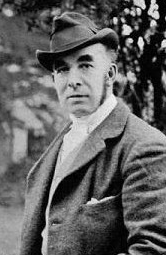
The Marquess Of Queensberry
Wilde was smugly confident at first that he could outwit Queensberry's lawyers with his eloquence. He viewed the whole trial as a game of words which he was sure to win – after all, although Wilde readily admitted to consorting with young men of low class, it was almost impossible in an age before the ubiquitous presence of cameras to prove that any homosexual activity had actually taken place. Wilde relied heavily in endearing himself to the court by resorting to humour and witty retorts and exposing Queensberry for the pompous and blundering old fool that he was. But it was exactly this flippancy which led to his downfall. When Wilde was asked whether he had ever kissed a certain servant boy, Wilde responded, "Oh, dear no. He was a particularly plain boy – unfortunately ugly – I pitied him for it." When he was then asked why the boy's ugliness was relevant, Wilde hesitated and for the first time became flustered: "You sting me and insult me and try to unnerve me,” he said, “and at times one says things flippantly when one ought to speak more seriously.”

It didn't take long after that for Queensberry to assemble enough evidence to prove his accusation. His lawyers paid rent boys to secure their damming testimonies and Wilde was soon forced to drop the case. He was now faced with debilitating legal charges and, having so publicly incriminated himself, the authorities had no option but to arrest him for gross indecency. This led to the second trial and eventually to his own destruction.

So why did this play affect me so? Well, it was Wilde's foolhardy decision to prosecute Queensberry which intrigues me. What was he thinking? What was behind this self destructive streak? Well, the fact is that Wilde was being used by Bosie to get back at his father. Bosie had a very troubled relationship with Queensberry, whom he despised. Whereas Bosie was sensitive and artistic, Queensberry was a bully and a brute and was more interested in the art of fighting than in his son's poetry (This is the same Queensberry who composed the famous boxing rules). Queensberry looked down on his son. He considered him a sissy and a weakling and never ceased tormenting him. He was fiercely opposed to Bosie's relationship with Wilde and was dead set on separating the two. In fact he had a bee in his bonnet about older men trying to corrupt his sons. He had already accused Rosebery, the liberal statesman and future prime minister, of having a homosexual affair with his elder son Francis who worked for him as his private secretary. Francis died in a suspicious hunting accident, which some believe may have been a suicide resulting from his father's threats to expose him. Bosie was deeply affected by his brother's death and as far as Wilde was concerned, this was the last straw. Encouraged by Bosie, Wilde took Queensberry to court in an attempt to put to an end his incessant bullying, but as we have seen, it all backfired in the most tragic fashion.

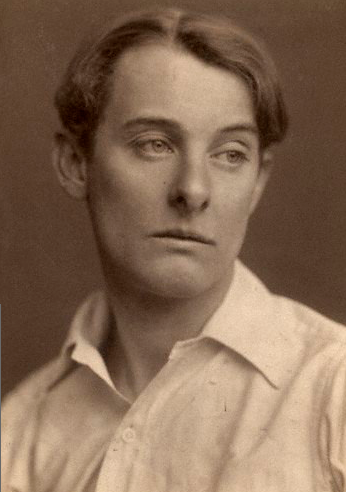
Lord Alfred Douglas (aka Bosie)
The trials of Oscar Wilde were a great sensation at the time and many films, books and plays have been written about it, all of which try to illuminate what was really going on in Wilde's mind when he embarked on this spectacular feat of self destruction. Was he a fool for love? A martyr for the gay cause? A shameless attention seeker? 

A certain phrase I once stumbled upon while reading Robinson Crusoe came to mind as I listened to the play. It is a phrase which intrigues me and which has subsequently become the underlying sentiment in my forthcoming novel “The Ornamental Hermit”:
‘It is a secret overruling decree that hurries us on to be the instruments of our own destruction. Even though it be before us we rush upon it with our eyes wide open’.